
Fishing Between the Panels
An English edition of Slow Loop brings fly fishing into another visual world.

Fishing has a particular rhythm on the page. A pause can occupy a panel. A change of expression can matter as much as a catch. The space between actions allows the people beside the water to become the story.
On October 6, emaqi announced its October manga additions, including the first English release of Maiko Uchino’s Slow Loop. The edition is scheduled for October 20. The news this week is the announcement; the book itself is still to come.
The premise begins with Hiyori, who fishes with techniques passed down by her late father. By the sea, she meets Koharu, whose father is marrying Hiyori’s mother. Their encounter becomes the beginning of a relationship as stepsisters, with fly fishing providing shared ground.
For Tales, the connection is to illustration and the ways an activity reaches a new audience. A fishing story told through manga carries different possibilities from a destination photograph or a technical film. Movement, conversation and the passage of time can all be organised through the page.

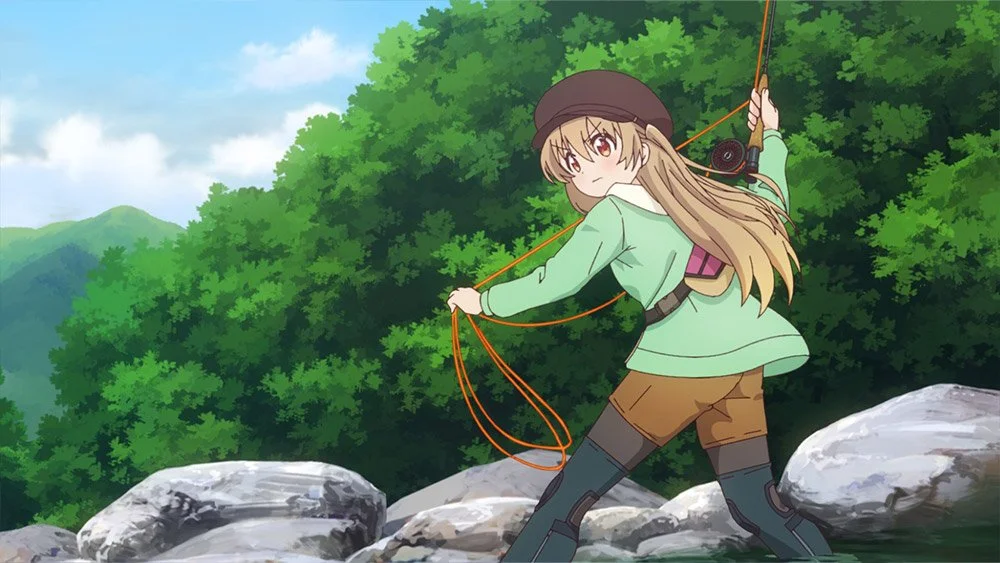
That makes this an interesting publishing development to follow. The sport enters through the lives of its characters, giving readers an emotional reason to understand what happens beside the water.
There is something particularly suited to fishing in a medium that asks the reader to control the pace. You can move quickly through a sequence or linger over a single image. That gives a drawn river or stretch of coast a different kind of presence from scenery passing across a screen. The reader spends time there.
The premise also places learning inside an ordinary relationship. Explaining an unfamiliar activity to someone close to you involves more than passing on instructions. You choose what to show first, what to leave until later and how to make the other person feel comfortable enough to keep going. Those decisions can reveal as much about the person teaching as the activity itself.



The forthcoming translation is worth following for that reason. It brings a fishing-centred story to readers through character and illustration, creating room for an audience whose first point of interest may be the people. A rod in a drawing can be the beginning of a much larger conversation.
The English edition opens another route into that world. It also offers a useful reminder that fishing culture is being made in places beyond the familiar tackle catalogue and river report.