
A Reel, Read as Design
Ari ’t Hart’s fishing reel invites a closer look at the objects we usually take straight to the water.

Fishing equipment is often examined through a narrow set of questions. How much does it weigh? Does it balance the rod? How does it perform when something pulls back? These are sensible things to ask. They can also leave remarkably little room to look at the object itself.
Ari ’t Hart’s work invites that second look. MoMA holds his Fishing Reel, dated 1990, in its Architecture and Design collection. The museum records aluminum, anodized aluminum and steel as its materials, and ATH Design International in the Netherlands as its manufacturer. It is a small piece of fishing equipment placed within a much larger conversation about designed objects.
The change of context is useful. A reel in a tackle bag is part of a system, ready for a particular task. A reel in a design collection can be considered more slowly: as an arrangement of components, a meeting of materials, a form made around movement. Its job stays the same. Our attention shifts.
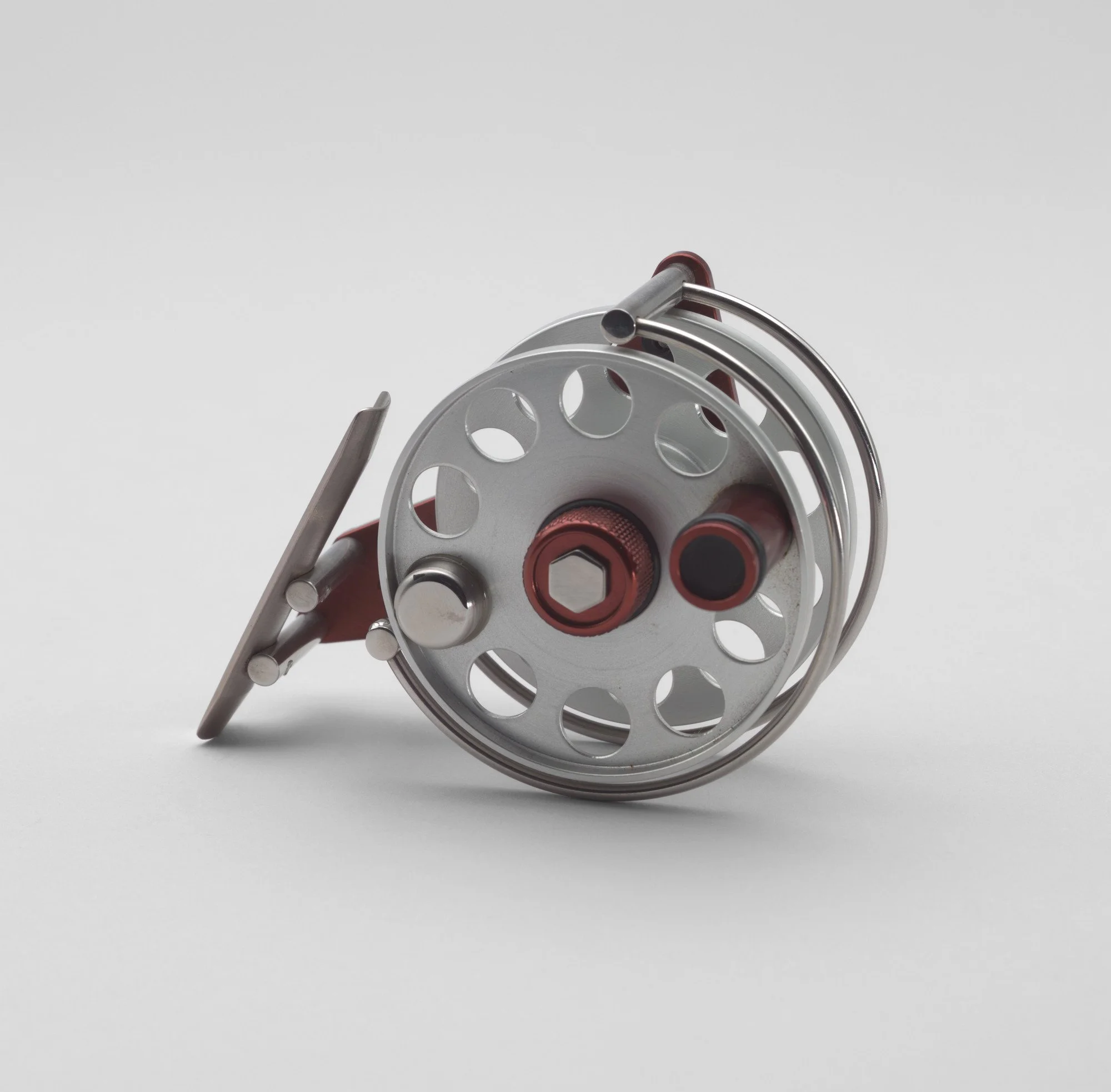
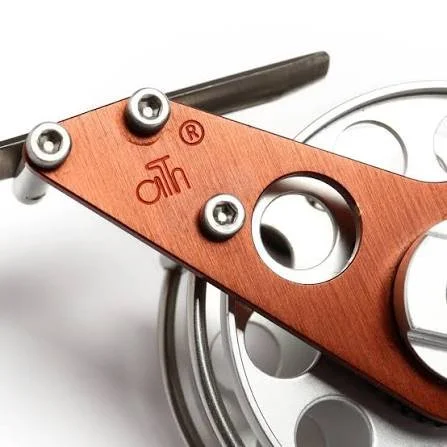
There is a pleasure in reading familiar equipment this way. Things normally handled almost automatically begin to reveal decisions. Where does the hand meet the object? Which parts need to move, and which must remain fixed? How much of the mechanism should be visible? Every answer contributes to an object’s character as well as its usefulness.
Those are editorial questions rather than a technical verdict on this particular reel. They suggest a way of approaching tackle that gives engineering and visual expression equal consideration. A museum record cannot tell us how something feels over a long day on the river. It can remind us that such an object belongs to the history of design as well as the history of fishing.
That overlap deserves more space. Anglers spend years developing preferences for tools, often through use, repair and familiarity. Design culture has its own vocabulary for understanding why certain objects reward that attachment. Bringing the two together can deepen the conversation on both sides.
MoMA currently lists the reel as not on view. Its place in the collection remains a quiet invitation to reconsider the equipment close at hand.
Before the next cast, take a moment to look at what is holding the line.