
A Place to Hang Wet Waders
At Olson Kundig’s Sol Duc Cabin, the routines of fishing become part of the architecture.
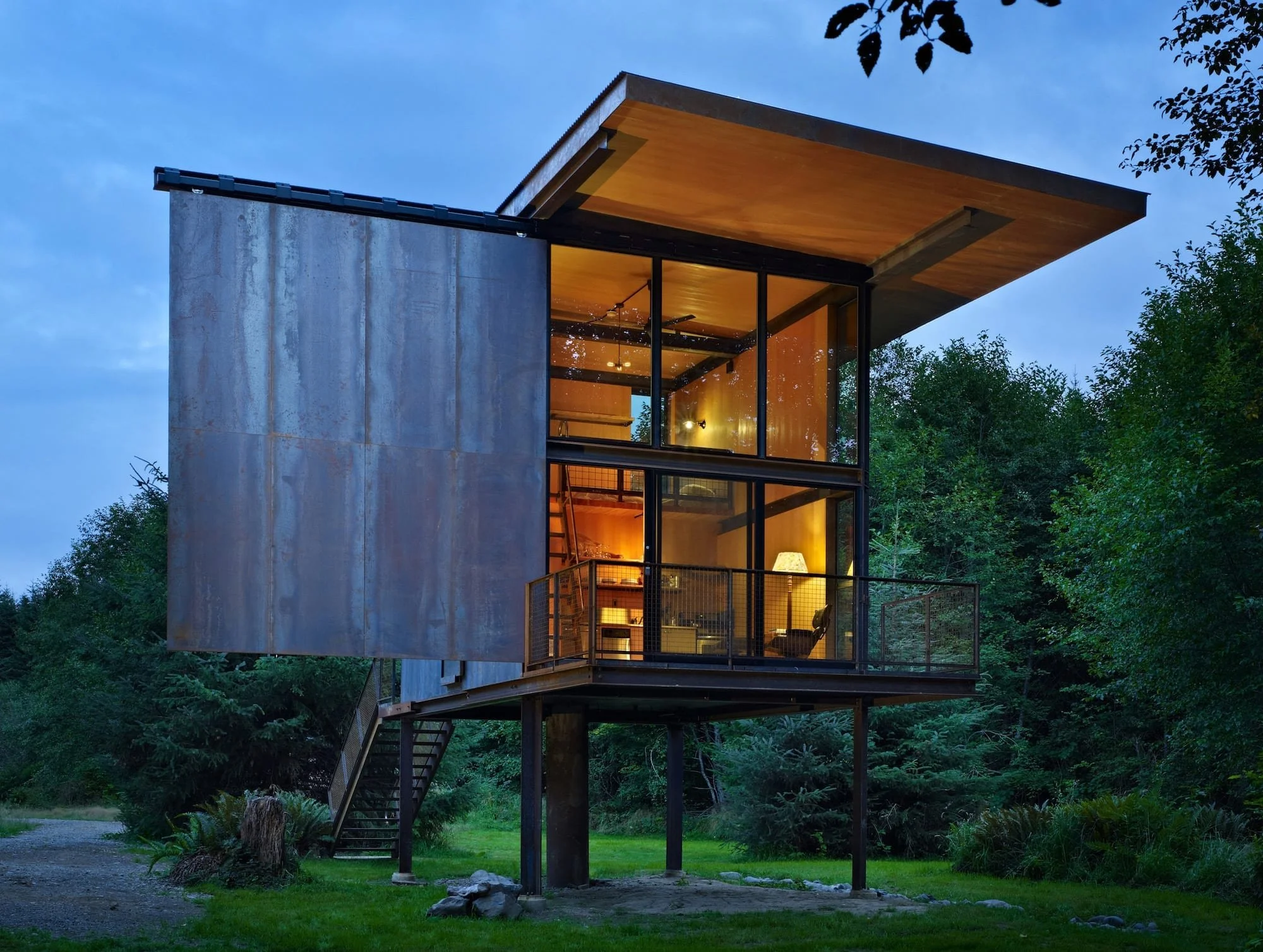
The most revealing detail in a fishing cabin might be the place where the wet equipment goes. It tells you whether someone has considered the return from the river: the dripping fabric, the awkward boots, the small collection of things that need to dry before tomorrow.
At Sol Duc Cabin, that thought is built into the entrance. A drilled steel support beneath the canopy provides somewhere to hang wet waders under cover. It is a modest intervention, and a useful way into the project. Fishing enters the architecture through a daily routine.
Designed by Olson Kundig for a steelhead angler and his wife, the private cabin sits on Washington’s Olympic Peninsula. In an interview with The Wading List, architect Tom Kundig and the client describe a compact retreat shaped by its proximity to the Sol Duc River, its remote setting and the demands of weather. The building is raised above the ground to address flooding and damp conditions. Steel protects the exterior; wood gives the interior warmth.
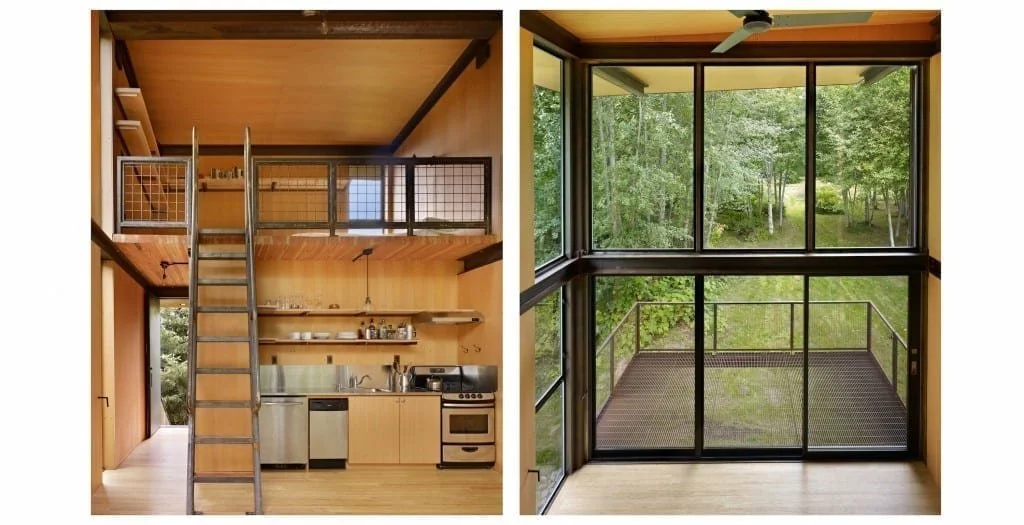
Large sliding steel panels cover the windows when the owners are away. Inside, a shared living space and sleeping loft keep the arrangement small and direct. These choices give the cabin a particular relationship with time: it must be comfortable when occupied, resilient when empty, and ready for its owners’ return.
The appeal lies in the connection between those requirements and the resulting form. A river brings more than a view. It introduces changing water levels, moisture, exposure and a reason to be outside in difficult weather. The building has to make sense within that reality.
Seen this way, a fishing retreat is an interesting architectural brief. The important spaces extend beyond the room itself: the threshold, the sheltered deck, the route back from the water. Comfort includes what happens before you sit down. A well-considered place can make those transitions feel almost unremarkable.
Sol Duc is an established project, and a private home rather than a bookable lodge. Its relevance is in the specificity of its design. The owners’ fishing life becomes legible through materials, protection and the things the building makes room for.
Good architecture sometimes begins with somewhere to leave your boots.